(Disclaimer: The following information pertains to the Department of Motor Vehicles (DMV) system primarily within the United States. Processes and specific requirements vary significantly by state. Always consult the official resources for the specific state you are dealing with.)

Navigating the Department of Motor Vehicles (DMV) can seem daunting, especially if you’re a new driver, moving states, or just unfamiliar with the process. This website aims to demystify the DMV, explaining its role, the services it offers, and how you can prepare for a smooth experience.
1. What is the DMV (Department of Motor Vehicles)?
The Department of Motor Vehicles (DMV) is a state-level government agency found in the United States. Its primary mission is to administer regulations related to drivers and vehicles within that specific state. Think of it as the main state authority responsible for ensuring drivers are qualified, vehicles are properly registered and identified, and official identification documents are issued.
While often associated with long lines, the DMV plays a crucial role in public safety and record-keeping.
2. Why Does the DMV Exist and What Are Its Common Names?
The DMV (or its equivalent) exists for several key reasons:
- Safety: Setting standards for driver competency (testing) and vehicle roadworthiness.
- Identification: Providing secure, verifiable identification for drivers and non-drivers alike.
- Regulation: Managing vehicle ownership (titles) and operating permissions (registration).
- Consumer Protection: Tracking vehicle history (like odometer readings) and ownership helps prevent fraud.
- Revenue: Collecting fees for licenses, registrations, etc., which often fund transportation infrastructure and agency operations.
While “DMV” is common, the actual name of the agency varies by state. Knowing this helps you find the correct agency in your area:
| Common Agency Name | Abbreviation | Example States |
|---|---|---|
| Department of Motor Vehicles | DMV | CA, NY, VA, CT, NV, DE |
| Bureau of Motor Vehicles | BMV | IN, OH, ME |
| Motor Vehicle Division | MVD | AZ, NM, MT, IA, CO, AL |
| Motor Vehicle Administration | MVA | MD |
| Registry of Motor Vehicles | RMV | MA |
| Department of Licensing | DOL | WA |
| Driver Services / Vehicle Services | DDS / DVS | GA, TN / MN |
| Highway Safety & Motor Vehicles | HSMV | FL |
| Secretary of State (handles DMV tasks) | SOS | MI, IL |
Tip: When searching online, use the specific name for your state if you know it.
3. Core Services Offered by the DMV: An Overview
Most DMVs offer a range of services, generally falling into these categories:
- Driver Licensing: Issuing, renewing, and replacing driver’s licenses (various classes), learner’s permits, and conducting written and driving tests.
- Vehicle Registration & Titling: Issuing vehicle titles (proof of ownership), registering vehicles (allowing legal operation), issuing license plates and renewal stickers/tags, processing title transfers.
- State Identification Cards: Issuing official, non-driver photo identification cards.
- Record Keeping: Maintaining driving records (violations, points, status) and vehicle records (ownership history, liens).
- Other Services: May include handling disability placards, dealer licensing, voter registration, organ donor registration, and more depending on the state.
4. Driver’s Licenses: Getting, Renewing, and Replacing
This is perhaps the most well-known DMV function. Key aspects include:
- Learner’s Permits: Usually the first step for new drivers, requiring passing a written knowledge test and vision screening. Allows supervised driving practice.
- Driver’s Licenses: Obtained after holding a permit (time varies by state and age) and passing a behind-the-wheel driving test. Different classes exist (e.g., standard passenger car, motorcycle, commercial vehicles – CDL).
- Renewals: Licenses expire and must be renewed periodically (frequency varies by state). Many states now offer online renewals, but some situations (like getting a REAL ID for the first time) require an in-person visit.
- Replacements: If your license is lost, stolen, or damaged, you can apply for a replacement (often available online).
- Updating Information: You’re required to update your address with the DMV when you move (often doable online). Name changes typically require an in-person visit with supporting legal documents (e.g., marriage certificate, court order).
Resource Tip: Preparing for your tests?
[Search YouTube for "how to pass driving knowledge test [State Name]"][Search YouTube for "behind the wheel driving test tips [State Name]"]- Find your state’s official Driver’s Manual on their DMV website – it contains all the necessary information.
5. Vehicle Registration and Titling: Keeping Your Car Legal
If you own a vehicle, you’ll interact with the DMV for these critical services:
- Vehicle Title: This official document proves legal ownership of a vehicle. It’s crucial when buying or selling a car. When a car loan is taken out, the lender (lienholder) is often noted on the title.
- Vehicle Registration: This allows your vehicle to be legally driven on public roads. It involves paying fees and receiving license plates and registration stickers/tags indicating when the registration expires. Registration must be renewed periodically (usually annually or biannually).
- License Plates: Issued during initial registration. States offer standard plates and often specialty or personalized plates for an extra fee.
- Title Transfers: When buying or selling a vehicle, the title must be legally transferred to the new owner through the DMV.
- Insurance Requirements: States require minimum levels of auto insurance to register and operate a vehicle. The DMV often verifies insurance status.
6. State Identification Cards: More Than Just Driving
For residents who don’t drive, the DMV issues official State Identification Cards.
- Purpose: These serve as a valid, government-issued photo ID for various purposes like banking, voting, age verification, and accessing services.
- Application: The process is similar to getting a driver’s license regarding documentation requirements (proof of identity, residency, etc.) but doesn’t involve any driving tests.
- REAL ID: State ID cards can also be issued as REAL ID compliant documents, useful for the same federal purposes as a REAL ID driver’s license.
7. Preparing for Your DMV Visit: Essential Documents (Including REAL ID)
Proper preparation is key to a successful DMV visit. While requirements vary by state and service, you generally need documents proving:
- Identity and Date of Birth: (e.g., US Passport, certified Birth Certificate, Permanent Resident Card, Certificate of Naturalization)
- Social Security Number: (e.g., Social Security card, W-2 form, SSA-1099) – Must show the full number.
- Residency (usually two proofs): (e.g., Utility bill, lease agreement, bank statement, mortgage statement, official mail) – Must show your current address.
- Lawful Status (if not a US Citizen): (e.g., Permanent Resident Card, valid foreign passport with visa and I-94)
Understanding REAL ID
REAL ID is a federal standard for identification required to board domestic flights and enter certain secure federal facilities.
- Deadline: Full enforcement begins May 7, 2025. After this date, standard (non-REAL ID) state licenses/IDs will NOT be accepted for these purposes (a passport or other acceptable federal ID will be needed).
- How to Get It: You must apply in person at your state’s DMV and provide specific documentation to verify your identity, SSN, residency, and lawful status.
- The Star: REAL ID compliant cards typically have a star marking (often gold or black) in the upper corner.
REAL ID Document Checklist (General – CHECK YOUR STATE’S SPECIFIC LIST!)
- [ ] Proof of Identity/DOB: (Choose ONE)
- Valid, unexpired US Passport or Passport Card
- Original or Certified Copy of US Birth Certificate
- Certificate of Naturalization / Citizenship
- Valid, unexpired Permanent Resident Card
- Valid Foreign Passport with US Visa and I-94
- (Other specific documents may qualify – check state list)
- [ ] Proof of Social Security Number: (Choose ONE – must show full SSN)
- Social Security Card
- W-2 Form
- SSA-1099 Form
- Pay Stub (showing full name and SSN)
- [ ] Proofs of Residency: (Choose TWO – must show current address)
- Utility Bill (dated within ~90 days)
- Rental/Lease Agreement or Mortgage Statement
- Bank/Credit Card Statement (dated within ~90 days)
- Insurance Policy Document (Home, Renters, Auto)
- Official Mail from Government Agency
- Tax Records (IRS or State)
- (Many others may qualify – check state list)
- [ ] Proof of Lawful Status: (Required if identity document doesn’t prove it, e.g., foreign passport)
- Permanent Resident Card, EAD, Foreign Passport with Visa/I-94, etc.
- [ ] Name Change Documents (If Applicable): If your current legal name doesn’t match the name on your identity document (e.g., birth certificate), bring certified documents tracing the change (e.g., Marriage Certificate, Divorce Decree, Court Order). Multiple documents may be needed for multiple changes.
Resource Tip: Get Official REAL ID Information:
[Visit the Department of Homeland Security REAL ID Website: dhs.gov/real-id][ALWAYS check the official website for YOUR state's DMV for their specific REAL ID required documents list!]Use search terms like["[State Name] DMV REAL ID checklist"].
8. How to Interact with the DMV: Online Services vs. In-Person Visits
Many DMV tasks can now be done without visiting an office:
| Service Type | Often Available Online? | Typically Requires In-Person Visit? | Notes |
|---|---|---|---|
| Driver’s License Renewal | Yes | Sometimes | First REAL ID requires visit. Vision tests sometimes. |
| Vehicle Registration Renewal | Yes | Rarely | May need inspection first in some states. |
| Address Change | Yes | No | |
| Replacement License/ID/Reg | Yes | Sometimes | If REAL ID needed or other issues exist. |
| Request Driving Record | Yes | No | |
| Schedule Appointment | Yes | N/A | Highly recommended for in-person services. |
| First-Time License/ID | No | Yes | Requires document verification, photo, tests. |
| REAL ID First Application | No | Yes | Requires document verification. |
| Driving/Vision Tests | No | Yes | Practical tests require physical presence. |
| Complex Title Transfers | Sometimes | Often | Especially with out-of-state titles or issues. |
| Name Change | No | Yes | Requires legal document verification. |
Tip: Always check your state’s DMV website first! You might save yourself a trip.
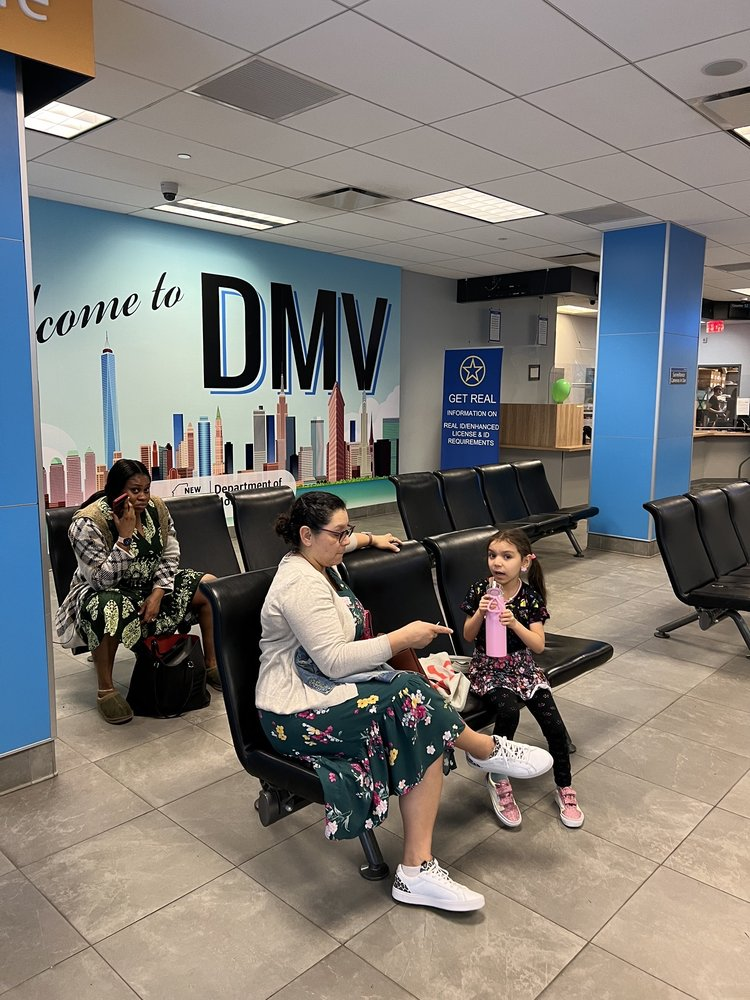
9. Navigating an In-Person Visit: Appointments, Walk-ins, and What to Expect
If you need to visit a DMV office:
- Appointments: HIGHLY recommended, and often mandatory in many locations post-COVID. Book well in advance via the DMV website or phone line. This drastically reduces wait times.
- Walk-ins: May be possible for certain services but expect potentially very long waits. Check the local office policy first.
- Preparation:
- Gather ALL required documents before you go. Use the checklists!
- Download and fill out any necessary forms from the website beforehand.
- Know the fees and bring an accepted payment method (check website – some may not take credit cards or cash).
- What to Expect: Check-in process (appointment confirmation), potential initial screening, waiting area (can be lengthy), called to a window/station, transaction processing, photo taken (if needed), fee payment, issuance of temporary documents (permanent card mailed later). Be patient and polite.
Resource Tip: Curious about the experience?
[Search YouTube for "what to expect DMV appointment" or "DMV visit tips"]
10. Tips for a Smoother DMV Experience
Dealing with the DMV doesn’t have to be a headache. Follow these tips:
- [ ] Check the Website First: Seriously. Most questions, forms, requirements, fees, and online service options are listed there.
- [ ] Schedule an Appointment: If you need to go in person, book an appointment online if possible. It’s the single best way to save time.
- [ ] Go Early or Mid-Month/Mid-Week: Avoid Mondays, Fridays, the first/last day of the month, and lunch hours if possible, as these are often the busiest times for walk-ins.
- [ ] Download & Complete Forms in Advance: Saves time and reduces errors at the counter.
- [ ] Gather ALL Documents: Create a folder. Double-check the required documents for your specific transaction against the official state list. Bring originals unless copies are explicitly allowed. Bring more proof than you think you might need, just in case (especially for residency).
- [ ] Double-Check Hours & Location: Verify the specific office hours and ensure it offers the service you need. Not all locations handle all transactions.
- [ ] Be Patient and Polite: DMV employees handle a high volume of customers. Patience and courtesy can go a long way.
- [ ] Ask Questions Clearly: If unsure about something, ask politely for clarification.
11. Finding Your State’s DMV: Websites and Office Locations
Since rules and services are state-specific, you MUST use your state’s official resources.
- Official Websites: The best way to find your state’s official DMV website is to search online. Use specific terms and look for official government domains:
["[Your State Name] Department of Motor Vehicles website"]["[Your State Name] BMV official site"](or MVD, RMV, etc.)- Look for URLs ending in .gov (e.g.,
dmv.ca.gov,dmv.ny.gov). Be wary of unofficial sites that may charge unnecessary fees or provide outdated information.
- Office Locations: The official state DMV website will have a locator tool to find branch offices near you, including their hours and the specific services offered at each location. Resource Tip:Use these directories or search terms:
[Search the official USA.gov state agency directory: usa.gov/state-agencies][Search Online for "official [State Name] DMV locations"]
12. Conclusion: Understanding Your State’s Motor Vehicle Agency
The DMV, whatever its name in your state, is an essential agency managing critical aspects of driving and vehicle ownership.
While it has a reputation for bureaucracy, understanding its services, preparing thoroughly with the correct documents (especially for REAL ID), and utilizing online services or appointments can make your interactions much more efficient and less stressful.
Always refer to your specific state’s official website as the primary source of truth for requirements, forms, fees, and procedures. With the right preparation, you can successfully navigate your DMV needs.